|
|
ACAT’s newsletter
January 2025
|
View online
|
|
|
|
The 2025 starting pistol has been fired and the race (or is it a saunter) into the New Year is well and truly on. January can be a challenge. For some, a new financial year beckons. For others the budgetary balancing act continues for a few months more.
In these dark days of winter, spring may seem a distant hope. But in this season of Epiphany, new perspectives, the realisation of what can be achieved will hopefully provide the required impetus to carry us and our church colleagues into the New Year.
We hope that this first newsletter of 2025 includes something which inspires, provokes discussion and even perhaps new thinking on more effective ways of supporting the ministry of our churches.
- What’s new
- Charity Commission Guidance on Giving – Year end reviews
- Rejecting Donations – Charity Commission Guidance
- The Charities (Annual Return) Regulations 2024
- Importance of Charity Law Compliance
- Waste Collection & charging for churches
- Changes to the Charity SORP
- Using AI in funding applications
- David Smith MP announced as UK Special Envoy for Freedom of Religion or Belief
- Points to Ponder
- From the Rear View Mirror – Reflecting on 2024, Pressing Forward in 2025
- Responding to the 2025 economic outlook
- The Green Shoots of Church Growth
- How do we tell our Church Story to the Local Community?
- Restoration of Notre Dame
- Helpline Q&A
- Claiming Gift Aid where declarations are still in force despite the donor’s death
- Funeral Collections
- Taxing payments to Vergers and Organists for attending Weddings and Funerals
- Also of Interest
- Taking Health & Safety Seriously
- Partners in Ministry
- Just Money Movement – Transforming the Financial System 2024 achievements
- Ecclesiastical Insurance
- easyfundraising
- Spring Training Programme
- Charities Engagement Team – Upcoming webinars
- Final Thought
God bless,
Ashley Ellis
ACAT Executive Officer
|
|
|
|
Charity Commission Guidance on Giving – Year end reviews
December’s Newsletter contained two reminders, one from the Charity Commission and the other from the Charities Aid Foundation, with helpful guidance on avoiding the threats posed by fraud, cybercrime, and banking scams.
On 3rd December, in advance of “Giving Tuesday,” the Charity Commission published a reminder on giving with confidence during the festive season. Whilst the festive season may be at an end, treasurers and trustees might still be minded to provide financial support to ministries and charities whose aims appear consistent with those of their churches.
The main points to consider when making donations are summarised as follows:
- Check the charity’s name and registered number on the Charity Commission website. Most charities with annual income over £5,000 should be registered.
- Verify that the charity is genuine by searching the internet for relevant information and how they spend the donations received
- Consult the Fundraising Regulator which provides a directory of those charities registered with it and who are committed to fundraising in line with the Code of Fundraising Practice.
|
|
|
|
Rejecting Donations – Charity Commission Guidance
The Children’s Society recently rejected a donation from the then Archbishop of Canterbury, stating that accepting it would not be consistent with its work in supporting abused children.
Whilst not commenting on the decision, the Society’s action serves as a reminder of the Charity Commission guidance on “Accepting, Refusing and Returning Donations,” updated 4 March 2024 and summarised in the March Newsletter.
The main considerations when refusing a donation are:
- Whether the donation is from an illegal source
- The donor does not have the mental capacity to make the donation
- If the donation is in the form of property, can the donor legally gift it?
- Are the aims of the donor organisation consistent with those of the recipient charity?
- Do you have the legal powers to refuse the donation?
- In refusing the donation are you acting in good faith?
- In refusing the donation, have all relevant factors been taken into consideration?
The detailed guidance note should be studied carefully in all circumstances when donations are received, particularly if they are unexpected and originate from a source hitherto unknown by your church or charity.
|
|
|
|
The Charities (Annual Return) Regulations 2024
The Charities (Annual Return) Regulations 2024, effected 20th December, came into force on 1st January 2025. All Charity Commission registered charities will be required to adhere to these regulations relating to annual returns submitted after that date. The regulations are in six sections.
Part A All charities
- Income & expenditure, grants received and made
- Trustee expenses
- Charitable activities outside the U.K.
- Trading subsidiaries
- Information regarding employees & volunteers
- Governance & safeguarding policies and procedures
- External risks to which the charity is exposed and their impact
- Details of the person submitting the return
Additional Information requirements
Part B Charities with annual gross income exceeding £25,000
- Serious incident reports ( if any)
- Availability of Trustees Annual Report & Accounts
Part C Charities with annual gross income exceeding £100,000
- Value of the single highest donation received from, a corporate donor, an individual donor, or a related party.
Part D Charities with annual gross income less than £500,000
- Where the value of government contracts or grants is less than 70% of total gross income.
- Income received from donations and legacies
- Income from charitable activities
- Other trading income
- Investment income
Part E Charities with annual gross income exceeding £500,000
- Income & Endowments received from all sources
- Expenditure incurred raising funds, investment management
- Charitable activities related expenditure
- Governance costs
- Recognised investment and asset revaluation gains and losses
- Value of all funds
- Support costs and level of reserves
- Employee numbers
Part F Interpretation and definitions
Reminder: This article provides an overview of key points, but it’s essential to read the full regulation to understand all the details and ensure compliance. Please refer to the complete text for comprehensive information.
|
|
|
|
Importance of Charity Law Compliance
The Charity Commission issued a press release on 12th December launching a statutory inquiry into the affairs of a religious charity, the trustees having repeatedly failed to file accounts or conduct a review of the charity’s accounting processes.
The inquiry will investigate
- The extent to which the trustees are complying with their legal duties regarding the administration, governance and management of the charity
- Their compliance with statutory accounting and reporting responsibilities and financial management
- The adequacy of the trustees’ oversight of the charity’s operation and activities.
This intervention by the Charity Commission, which is not undertaken lightly, serves as a reminder to all members of church governing bodies that compliance with charity law is mandatory and requires the highest priority.
It is very easy to regard statutory obligations as being of less importance than the work of ministry. However, this is arguably a good example of the need to “render unto Caesar.”
|
|
|
|
Waste Collection & charging for churches
Current regulations governing controlled waste provide for it to be collected by the local authority free of charge due to it being designated “household waste.” https://www.legislation.gov.uk/uksi/2012/811/schedule/1
However, where the church and related buildings are hired out for activities not connected with religious worship, this is regarded as a commercial activity, and therefore, any waste collection is chargeable.
Recent experience in the Anglican Diocese of London is that the collection of waste from building works or reordering projects may also be subject to a charge.
It would be interesting to know whether there have been circumstances where your church waste collection has been charged for.
|
|
|
|
Changes to the Charity SORP
Changes to the Charities SORP are due to come into effect on 1st January 2026. In March last year, the Financial Reporting Council (FRC) completed its periodic review of FRS 102, which underpins the SORP framework. The SORP-making body plans to submit a draft of the new SORP to the FRC for approval in January 2025, with a 12-week public consultation expected to begin in March 2025. The final version of the updated SORP is anticipated to be issued in Autumn 2025.
The changes are expected to bring SORP into line with FRS102 in two respects
- Accounting for leases where a charity enters into a property lease. It is anticipated that the charity’s balance sheet will, in future, be required to reflect the liability under the lease for future rental payments.
- Where charities receive income from foreign currency transactions, they will be required to assess their accounting policies in respect of the revenue recognition to ensure they comply with the new requirements.
These changes will likely impact only churches that lease their premises from a third-party developer/freeholder and/or receive currency from a foreign source.
|
|
|
|
Using AI in funding applications
AI is becoming more and more accessible and increasingly part of our daily lives. Many of you may use it on purpose to increase productivity, answer questions, or even use it without realising when searching on the internet.
As the use of AI grows and more tools become available, the National Lottery has provided some advice about how AI tools should be used in funding applications. Importantly, they do not ban the use of AI and, at times, even encourage its use. However, they provide some valuable tips about how they could and should be used.
AI tools can be invaluable, especially for those who struggle with the English language, maybe because of a disability or not having English as their first language. Here at ACAT, we have used AI for all sorts of tasks, from improving our writing to developing creative ideas.
The trick with AI is understanding where it can help and where it might fall short.
|
|
|
|
David Smith MP announced as UK Special Envoy for Freedom of Religion or Belief
It was announced on 11th December that David Smith MP would become the UK Special Envoy for Freedom of Religion or Belief. Having worked in sub–Saharan Africa, the Middle East and Asia he will seek to address the issue of religious persecution wherever it occurs.
David will work alongside the UK’s global diplomatic networks supporting and encouraging the widening of human rights recognition. He will need the prayers of us all in this important work.
This appointment is clearly consistent with the Prime Minister’s view of the importance of churches and faith groups generally in supporting, enhancing and making a difference in their local communities.
The question arises: Does your local MP demonstrably encourage and support the work of your church in the local community? Did you see them in church during the Christmas period? Do you make a point of inviting them to your church events throughout the year, not just on special occasions?
|
|
|
|
From the Rear View Mirror – Reflecting on 2024, Pressing Forward in 2025
The month of January is a time when we look ahead to what the next twelve months might hold for us personally and in our churches. The year that’s gone is consigned to history. However, before completely dismissing it, spending a little time reflecting on what was memorable, the achievements, the ups and the downs can be extremely beneficial.
If conducted honestly, this can be both an encouraging and a painful process. Learning from the past is arguably essential if future progress is to be experienced. As members of our church governing body will we set aside an appropriate amount of time during our first meeting of 2025 to review the events of the past year?
Looking prayerfully and constructively at the past year can provide an effective launching pad as we “press on” into 2025.
It would be very helpful to know from our members, what their churches experienced in 2024 and how that might shape the work in 2025.
|
|
|
|
Responding to the 2025 economic outlook
Economically, the year has not started well, with a recession possibly looming large. This begs the question: Do we have any contingency plans within our church finances? The personal incomes of our members are likely to come under pressure as the cost of living rises.
All the evidence is that not only the vulnerable in our communities will be affected, but most will also be impacted in one way or another. So, what will our response as church treasurers be? A few simple pointers.
- Understand the community in which your church is located, their likely needs and how you might respond. This is a real opportunity to demonstrate faith in action.
- Have some sense of your membership and the increased demand on their personal income.
- Consider both the church operating budget and any proposal for capital expenditure. Can items be postponed or reduced in cost if essential?
- If your church is fortunate to hold significant reserves, can they be reduced to support any revenue deficit in the short term until things improve?
|
|
|
|
The Green Shoots of Church Growth
The annual Theos “think tank” lecture in November entitled “Does the Future have a Church” concluded that despite a decline in church attendance among mainstream Anglicans, numerical growth in some parts of the wider church was evident. Whilst this may appear to be a contradiction in terms, it serves to illustrate the complex nature that is the “Body of Christ on earth.”
Although the evidence appears to be anecdotal rather than based on statistical analysis, it is churches at opposite ends of the theological spectrum, orthodox and evangelical, where this growth is being seen.
Mike Royal, general secretary of Churches Together in England, stated that the organisation has 54 member denominations, with the membership of Orthodox churches numbering three million. Evangelical churches were also growing, with evidence of significant church planting in local communities.
Against a background of political, social and economic uncertainty on a global scale, is this perceived growth an indication of the eternal search for a real spiritual meaning to life? Meaning which we believe the Christian gospel provides. It would be interesting to hear from members whether they are seeing growth within their churches. It is also perhaps significant that there appears to be confidence in the local church, as opposed to the national institution, which is perceived as being managerial and overbearing.
|
|
|
|
How do we tell our Church Story to the Local Community?
Effective communication is essential for fulfilling Christ’s great commission (Matt.28:19). So, how do we tell our story to our community?
The tools we have at our disposal have changed significantly over the years, and technology, while presenting great opportunities, also poses challenges.
Telling our church story is essential if we are to attract and inspire others to join the fellowship. Do our local communities understand our purpose and the practical and spiritual support it offers?
Most churches probably have a magazine they distribute and, hopefully, a website that should tell the story. The events that take place demonstrate that the church is alive, relevant, welcoming, and open to all.
Many churches will soon be preparing the annual report. A great opportunity to tell simply and clearly what has been achieved, what perhaps could have gone better, our vision for the future and how lives can be changed by being a part of this story.
How frequently do we stand back and reflect objectively on how we are telling the story? Is the website frequently refreshed and updated? Is the church magazine, colourful, attractive, (dare I say) readable?
Telling the story effectively also has a very pragmatic purpose. Demonstrating the contribution our churches make to the local community and beyond, as well as the support they provide, demonstrates the effective use of their resources and can encourage grant makers and donors.
Do we ever ask ourselves whether, if as non-church members, we would be attracted to our church by the image it portrays?
|
|
|
|
Restoration of Notre Dame
Whatever our churchmanship, we cannot but be inspired by the restoration of Notre Dame in Paris some five years after it was devastated by fire. This restoration perhaps serves to remind us that all our churches, irrespective of age, size, and ornateness, should be places which, in their own individual ways, are places of inspiration.
It’s very easy to take our church buildings for granted in the sense that all that is necessary is for them to be warm, well-maintained, and reasonably comfortable. Treasurers and their fellow trustees are ultimately responsible for ensuring this and for making their churches welcoming places where people can feel inspired and find spiritual comfort.
How seriously do we take this aspect of our work? Are our churches places of inspiration, where the presence of God is quietly felt?
|
|
|
|
Claiming Gift Aid where declarations are still in force despite the donor’s death
Q: Over the last year we have had two members who died during the financial year of the church. They both contributed to our Gift Aid scheme and their declarations were still in force at the time of their deaths. When we submit our returns to HMRC can we claim their donations under Gift Aid up until when they died? There are no donations from their wills.
A: Yes, you can reclaim Gift Aid on gifts received prior to their deaths – the Gift Aid declarations still apply as far as the church is concerned. Sometimes, a standing order may not be cancelled immediately after someone’s death, and gifts are received before the bank is contacted. These gifts belong to the estate so you shouldn’t claim Gift Aid on these. If requested, you would have to return the gifts but we assume that it is unlikely that you will be asked. You can’t reclaim Gift Aid because (1) the declaration effectively ceases on death and (2) you don’t know what tax arrangements are made by the executors following any gifts that are made after someone’s death.
Funeral Collections
Q: My enquiry concerns free-will offerings collected at funerals. For many years the church’s practice has been informed by ACAT’s advice that “all moneys received in the church should go through the church records” so, in practice, the funeral director was not allowed to remove the offering from the church premises. Our Church Council recently agreed that we will no longer follow this guidance. Future arrangements will be for the funeral directors to provide a collection box which is sealed at the end of the service by the funeral director with the witness of the church representative (normally the minister) and then immediately handed to the family to deal with as appropriate. I would be grateful for any observations you have about this.
A: As you point out, our guidance for many, many years said that ALL collections taking place in the church should be handled by the church. Way back, this concerned me too because, in our town-centre Baptist church, we weren’t doing that. You’ll be pleased to know that we have adjusted the guidance to reflect practicalities and make life easier for everyone. The guidance is found in Chapter 3 of our Handbook https://www.acat.uk.com/handbook/chapter-3-internal-controls/ [login required].
The updated wording of the final paragraph of section 2(a) reads “If the church is acting as a ‘third party’ (i.e. the funeral collection has not been organised by the church), then the church is ‘acting as agent’. The moneys should go through the church account books but are excluded from the church annual accounts (but mentioned in the notes as ‘acting as agent’). Ideally and if possible, in the case of a funeral, it is better not to handle the moneys but leave it to the family or funeral director.”
The procedure that your Church Council are suggesting looks fine and in line with what we are now saying.
Taxing payments to Vergers and Organists for attending Weddings and Funerals
Q: Increasingly we are paying vergers and organists for weddings and funerals. We have always counted this as agency funds and passed the money straight on, replacing the cash system that used to operate in simpler times. Can you clarify if this is legitimate, and if I have an obligation to tell HMRC or do I have to put them on payroll? Amounts involved are £60 for a verger and £90 for an organist. We use various people, depending on their availability. One is also an employee; another is self-employed but does contract work for us.
A: Technically the church is not employing the verger/organist for these occasional services. The church is ‘acting as agent’, i.e. receiving the fee and passing it on. A problem arises when the church also pays them for regular services. The church may be thinking that they can “get away” with the problem by calling the fee an honorarium – unfortunately this is salary by another name! If the organist and/or the verger is/are not employed by the church and only receive fees for weddings and funerals, it is up to the individual to include these fees in their tax returns. There may be a ‘de minimis’ limit of £1,000 before they need to declare trading income but the individuals should check this out https://www.gov.uk/guidance/tax-free-allowances-on-property-and-trading-income.
- If the person is employed by the church as verger or organist or some other role, then it saves that person submitting their own tax return (assuming they remember!) if you add the fee to the next payroll. However, if the church is ‘acting as agent’ and the individual concerned wants the fee paid separately because they fall within the ‘tax free allowance’ mentioned above, then the employee should submit an invoice to the church addressed to the person who organised the occasional service, so that the church can reimburse against that.
- If the person is self-employed – which means that they are registered with HMRC for income tax and NIC purposes – then they should submit an invoice to the church (which should be addressed to the person organising the occasional service). The person doesn’t require to show their tax number or anything similar on the invoice – although you can ask if they are registered – in essence, you have to take it on trust that they are registered if they produce an invoice. In our Handbook, we have a useful section that explains the difference between Employed and Self-employed https://www.acat.uk.com/handbook/chapter-8-employment-issues/ [login required] – see section 3.
|
|
|
|
Taking Health & Safety Seriously
An important question for all church treasurers and trustees. How seriously do you take Health & Safety? Sadly, it is one of those subjects which can frequently elicit a negative response. A necessary distraction from the important business of missions and ministry.
However an article available on the Fellowship of Independent Evangelical Churches’ website (co-authored by ACAT director and trainer Manny Kemp alongside Pierre Carion and Becky Thomas) is unequivocal in explaining that far from being a distraction, a practical yet sensitive approach to Health and Safety enables us to value and properly exercise love to those who are part of our church family.
- Health & Safety is vitally important – Ignored at our peril
- Taking our Health & Safety responsibilities seriously is a practical response to the biblical injunction to love one another.
- Problems are created when safety issues are ignored or badly managed. Resolving them can be time consuming and costly.
- Adherence to Health & Safety legislation is a statutory obligation supported by a biblical injunction to honour earthly authorities (Rom 13 :1-7, 1 Pet 2:11-17)
- The key legislation dating back to 1974 is the Health and Safety at Work etc. Act 1974
- Failure to ensure the required standard of safety is a criminal act for which Trustees are ultimately answerable.
- Understanding Health & Safety
- It involves all who enter our church premises and site.
- It affects the public, employees, volunteers, contractors.
- This is fundamentally about protecting people from harm.
- As members of the church governing body, they are our responsibility.
- What should be our approach to Health & Safety in Church?
- Have a policy and a plan explaining how the church manages the issue
- The plan should be clear and demonstrate good practice.
- Assess and manage the risks involved.
- Risks and the way we deal with them are part of life.
- Risk assessment and management are essential in our churches
- Identify those things which might cause illness or injury
- Decide on the likelihood of such events
- Implement the necessary action to avoid or minimise the events.
- Everything in the plan must be implemented and periodically reviewed.
- Establishing an effective church Health & Safety environment
- Appoint a competent person, with appropriate experience, to be responsible
- Provide information available to all and training where appropriate
- Report accidents and illnesses, if in doubt consult Health & Safety Executive
- Provide a safe, healthy working environment for employees and volunteers
|
|
|
|

Just Money Movement – Transforming the Financial System 2024 achievements
Most months in our Partners in Ministry section we feature a link to an event or initiative promoted by Just Money Movement. The organisation aims to be the “go-to place” for churches wishing to take seriously their responsibilities connecting faith, money and justice.
In the management of our church finances, it is very easy to so concentrate on balancing the budgets, ensuring there is sufficient in the bank to pay the bills, that the wider issues are overlooked.
The Just Money Movement summary view of achievements during the past year is a reminder, if needed, of the growth of churches seeking to act differently with their financial resources.
By engaging with local MPs and, when the opportunity arises, “speaking truth to power” on societal, economic, and climate-related issues, we can attempt to shape a fairer, greener world.
Initiative such as Good Money Sunday, Tax Justice Sunday, in addition to supporting and encouraging churches to act in a fairer, more just use of finances have contributed to raising awareness and challenge churches on these issues.
How do we respond to the challenge of creating a different approach to the stewardship of our finances? What, if anything, are we doing practically in the management of our church finances to bring about change?
|
|
|
|

Ecclesiastical Insurance
Fundraising in 2025
If fundraising is one of your financial priorities for the New Year and you are finding it a daunting prospect a helpful approach is offered.
- Where to start
- Researching donors
- Making the ask
- Saying thank you
https://ecclesiastical.com/church/fundraising/
Managing Risks throughout the year
Diarising inspection of equipment and issues generally which could pose a risk to people and church property in general could prove very beneficial. Why not set up a risk calendar?
https://ecclesiastical.com/risk-management/church-risk-calendar/
Providing Warm Spaces
Many churches are opening their doors during the week as warm spaces for those in the community who are struggling financially to pay their heating bills. This is a great opportunity to demonstrate love in action. However, there are things which need to be considered.
https://ecclesiastical.com/risk-management/church-warm-spaces/
|
|
|
|
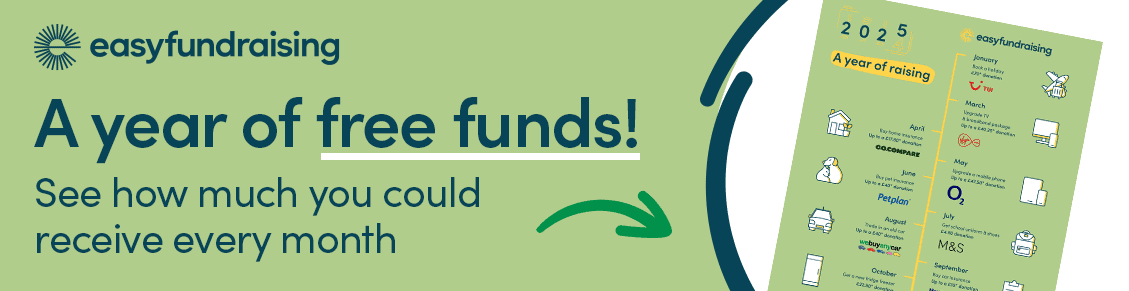
easyfundraising
Over a year, just one person could raise £358 for your church for free without doing anything other than shopping online. Imagine what a group of people could do. And what you could buy for your church.
Join easyfundraising to find out. They work with over 8,000 online retailers, so your church can receive free donations when your congregation and clergy shops online. £358 can be raised by one person through those big annual one-off purchases like holidays, insurance, but let’s not forget the everyday items. A last-minute birthday present from Etsy or a jumper from John Lewis can also earn your church smaller but more frequent donations.
A new year with new fundraising goals should start with a new way to raise. Find out how here: www.easyfundraising.org.uk/acat
|
|
|
|
|
Spring Training Programme
|
|
|
|
|
- Accruals Accounting – Accounts for Larger Churches (2-session course)
- Date: Saturday 1 and 8 February
- Time: 10 AM – 12 noon
- Trustee Training for Churches (2-session course)
- Date: Saturday 1 and 8 February
- Time: 2 PM – 4 PM
- The Church Treasurer: Insights into the Role and Responsibilities
- Date: Tuesday 4 February
- Time: 7 PM – 8 PM
- Gift Aid: Maximising the Benefits and Reducing the Pitfalls
- Date: Thursday 6 March
- Time: 6 PM – 9 PM
- Being a Treasurer: The Basics (3-session course)
- Date: Monday 10, 17, 24 March
- Time: 7 PM – 9 PM
- Introduction to being a Church Trustee: Some things to think about
- Date: Tuesday 1 April
- Time: 7 PM – 8 PM
Do get in touch if there is a particular course you would like to see in the programme during 2025. Please keep checking the newsletters, website and social media for details as they become available. Contact Cath Fox to discuss further on training@acat.uk.com.
|
|
|
|
|
Charities Engagement Team – Upcoming webinars
|
|
|
|
|
|
The Charity Commission for England and Wales registers and regulates charities to ensure that the public can support charities with confidence. Through regular events, the Charities Engagement Team supports trustees and charity leaders to manage their charities effectively.
Currently, all courses for January and February are fully booked. You can check on the Charities Engagement Teams website for the new year schedule.
|
|
|
|
|
|
The phrase “to burn one’s bridges” originates from Roman times and basically signifies reducing all possibilities of going back. New year, new hope and who better to encourage that than St Paul’s example? “I press toward the mark for the prize of the high calling of God in Christ Jesus.” (Phil3:14).
Church administration is many things: frustrating, satisfying, and demoralising at times. But above all it is a “high calling of God.” So, let’s grasp hold of that as we press onwards into 2025.
God bless you in your work, and thank you for all your continued support.
|
|
|
Thank you for your support!
|
|
|
|
That concludes the January newsletter which we hope you found informative and helpful.
Remember to follow us on social media and look in on the website occasionally.
|
|
|
|
|
Charity no. 1072733 Registered address: Association of Church Accountants and Treasurers, C/O KM Accountants, 1st Floor, Block C, The Wharf, Manchester Road, Burnley, BB11 1JG.
|
|
|
|